Uṣūl al-Iftāʾ & Rasm al-Muftī
Principles of issuing fatwā, identifying authoritative positions within the madhhab, methods of tarjīḥ, and the responsibilities and etiquette of the muftī.

Aflah International Academy
أكاديمية أفلح الدولية
Aflah International Academy
أكاديمية أفلح الدولية
New Course Launched · For Ulama and Alimat
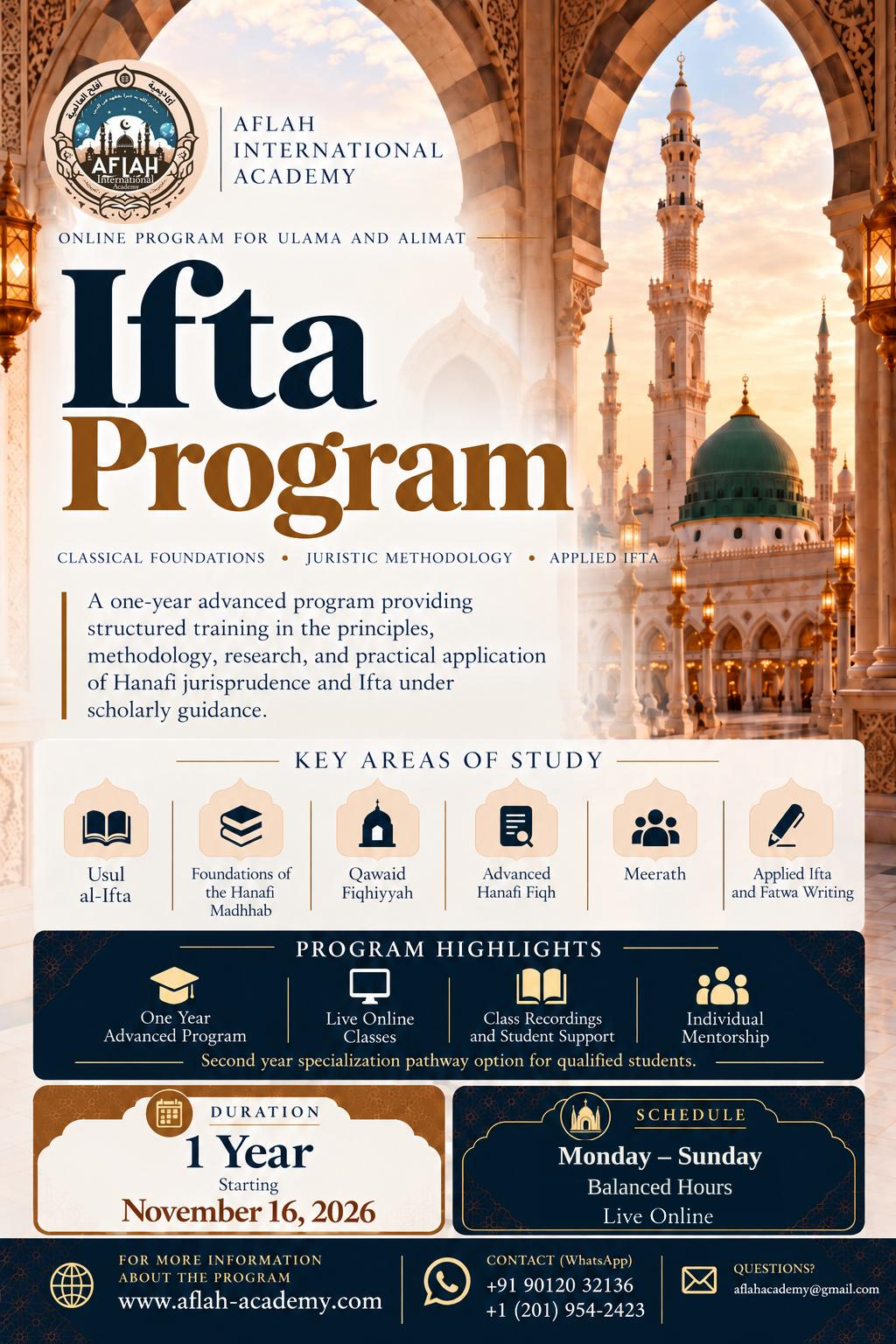
Classical Foundations · Juristic Methodology · Applied Iftāʾ
A one-year advanced online program providing structured training in the principles, methodology, research, and practical application of Hanafi jurisprudence and Iftāʾ under scholarly guidance.
Class Timing Announcement
❖Classes Begin
InshaAllahNovember 16, 2026
2 classes each day
Each class: 40 minutes
Total: 80 minutes per day
3 classes each day
Each class: 40 minutes
Total: 120 minutes (2 hours) per day
One year of study across 2 semesters, each lasting 6 months. All fees are in USD. Pay securely online with Stripe.
$100 / month
12 monthly payments · $1,200 for the full year
Full-Year Discount
$1,000 / year
Save $200 when you pay for the full year upfront.
Principles of issuing fatwā, identifying authoritative positions within the madhhab, methods of tarjīḥ, and the responsibilities and etiquette of the muftī.
Historical development, methodology, major jurists, and authoritative works, with particular attention to the hierarchy and classification of the madhhab’s legal literature.
Study and application of the major legal maxims and foundational principles used in understanding and applying Hanafi law.
Guided study of classical texts, developing the ability to navigate authoritative works, understand differences of opinion, and recognize legal reasoning and relied-upon positions.
Principles of Islamic inheritance law, practical estate calculations, and the distribution of estates through applied casework.
Supervised research and fatwā-writing training: identifying the legal question, researching classical sources, determining the applicable ruling, and formulating clear, responsible responses.
Applying established Hanafi principles to contemporary questions and emerging nawāzil through sound juristic methodology, rather than simply memorizing rulings.
One-on-one guidance and developmental feedback to strengthen each student’s research, writing, legal reasoning, and use of classical sources.
A central component of the program is تمرين الفتاوى (Tamrīn al-Fatāwā). Through supervised practical questions, students learn to:
Examine contemporary financial transactions, medical issues, family and social questions, technology, modern contracts, and emerging nawāzil through established Hanafi jurisprudence. The emphasis is on applying classical principles responsibly to new circumstances.
Join teachers and fellow students online each month to discuss challenging masāʾil, contemporary questions, student research, and selected readings, supporting your development as a student of fiqh and Iftāʾ.
Receive individualized academic guidance throughout the program, with feedback on research methodology, classical sources, legal reasoning, and fatwā writing. Upon successful completion of the one-year program, qualified students may be offered a Specialized Advanced Second Year of concentrated study, supervised research, and mentorship in contemporary financial transactions, family law, medical fiqh, inheritance, ʿibādāt, or another area of Hanafi jurisprudence.
The program draws upon classical and contemporary Hanafi works through direct study, guided readings, independent assignments, and practical research. Selected texts and references may include the following; not every work is studied in full.
أصول الإفتاء وآدابه
Uṣūl al-Iftāʾ wa Ādābuhu
Mufti Muḥammad Taqī ʿUthmānī
Selected discussions from the works of ʿAllāmah Ibn ʿĀbidīn al-Shāmī رحمه الله on Rasm al-Muftī, tarjīḥ, authoritative positions, and the methodology of issuing fatwā.
أصول السرخسي
Uṣūl al-Sarakhsī
Imām Shams al-Aʾimmah al-Sarakhsī
المذهب الحنفي
al-Madhhab al-Ḥanafī
Selected study of the madhhab’s origins, authorities, terminology, methodology, and literature
الأشباه والنظائر
al-Ashbāh wa’l-Naẓāʾir
Imām Zayn al-Dīn Ibn Nujaym al-Ḥanafī
Applying the major legal maxims across chapters of fiqh and to new legal questions.
الدر المختار شرح تنوير الأبصار
al-Durr al-Mukhtār Sharḥ Tanwīr al-Abṣār
Imām ʿAlāʾ al-Dīn al-Ḥaṣkafī
رد المحتار على الدر المختار
Radd al-Muḥtār ʿalā al-Durr al-Mukhtār
ʿAllāmah Muḥammad Amīn Ibn ʿĀbidīn al-Shāmī
Guided training in comparing transmitted positions, identifying muftā-bihi positions, and applying the madhhab’s principles to practical cases.
الفرائض السراجية
al-Farāʾiḍ al-Sirājiyyah
Imām Sirāj al-Dīn Muḥammad ibn Muḥammad al-Sajāwandī
المبسوط
al-Mabsūṭ
Imām al-Sarakhsī
بدائع الصنائع
Badāʾiʿ al-Ṣanāʾiʿ
al-Kāsānī
بداية المبتدي
Bidāyat al-Mubtadī
al-Marghīnānī
الهداية
al-Hidāyah
al-Marghīnānī
المحيط البرهاني
al-Muḥīṭ al-Burhānī
Ibn Māzah
كنز الدقائق
Kanz al-Daqāʾiq
Abū al-Barakāt al-Nasafī
مجمع البحرين
Majmaʿ al-Baḥrayn
Ibn al-Sāʿātī
فتاوى التاتارخانية
Fatāwā al-Tātārkhāniyya
Compiled under Tātār Khān
فتح القدير
Fatḥ al-Qadīr
Ibn al-Humām
النهر الفائق
al-Nahr al-Fāʾiq
Ibn Nujaym
البحر الرائق
al-Baḥr al-Rāʾiq
Ibn Nujaym
الفتاوى الهندية / الفتاوى العالمكيرية
al-Fatāwā al-Hindiyyah (al-ʿĀlamgīriyyah)
Compiled under Aurangzeb ʿĀlamgīr
جواهر الفقه
Jawāhir al-Fiqh
Mufti Muḥammad Shafīʿ
الفقه الإسلامي وأدلته
al-Fiqh al-Islāmī wa-Adillatuhu
Wahbah al-Zuḥaylī
Alongside Radd al-Muḥtār and the texts above, students will consult selected classical and contemporary fatwā collections and works on emerging nawāzil. Required independent reading develops the ability to locate masāʾil, compare references, and understand the language and conventions of the fuqahāʾ. A more extensive reference list will be provided for practical research.